Maharashtra Scraps Institute-Level MBBS Admissions in Private Medical Colleges; All Seats Through CET Cell CAP from 2026-27

The Maharashtra government has made a big change to make the medical admission process more open and clear.
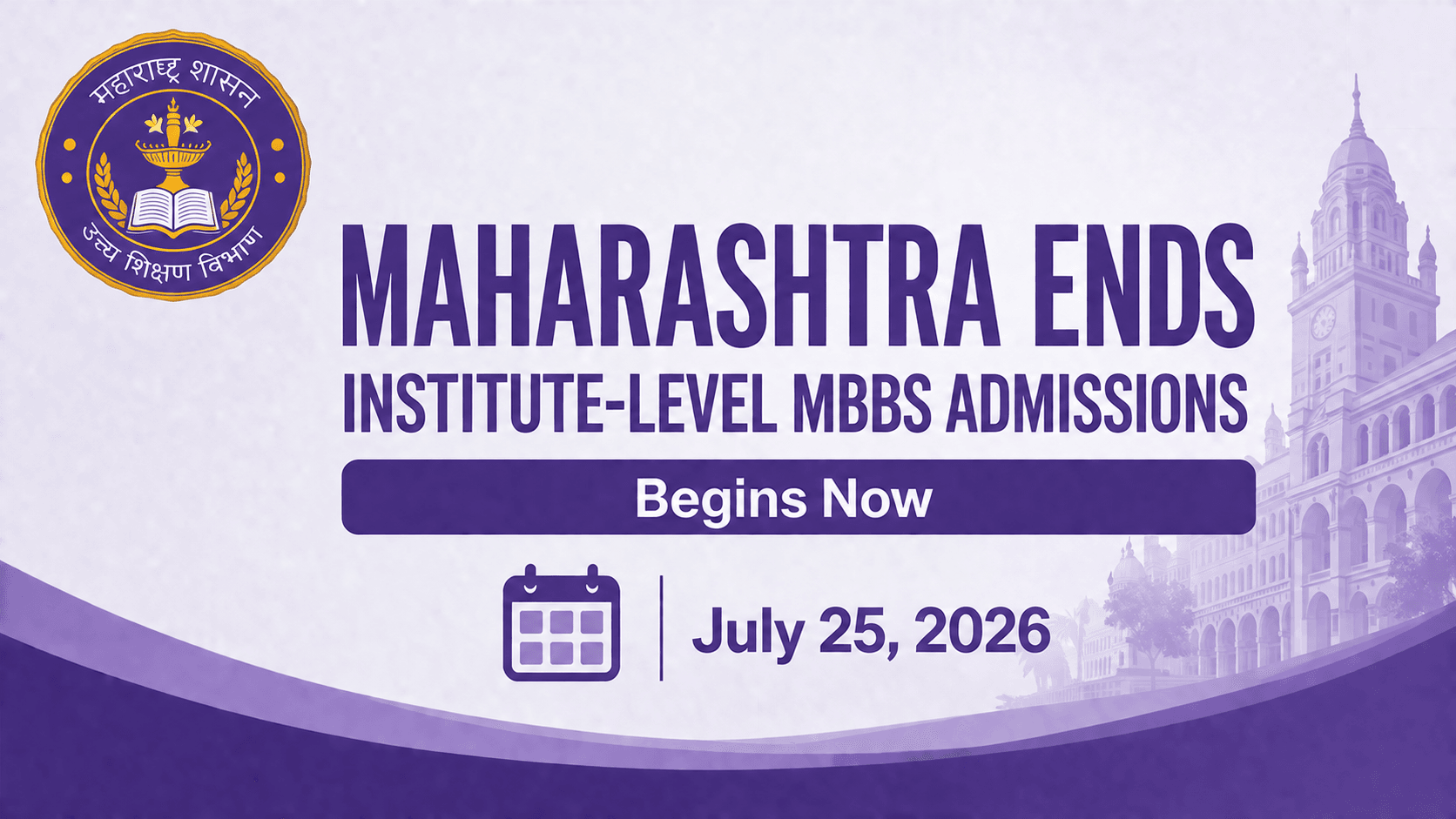
The Maharashtra government has made a big change to make the medical admission process more open and clear. They have stopped private medical colleges from doing their own admissions for MBBS courses. Starting from the 2026-27 academic year, all undergraduate medical admissions in private colleges will be done through the State Common Entrance Test (CET) Cell's Centralised Admission Process (CAP). This decision is meant to stop any unfair practices and make sure that every MBBS seat is given based on the merit of the NEET UG exam.
What Has Changed?
Previously, private medical colleges in Maharashtra could have their own admissions after the regular counselling process to fill any empty MBBS seats. These admissions allowed colleges to directly accept eligible students from the remaining NEET-qualified candidates. However, with the new admission policy, these college-level rounds are no longer allowed. Every MBBS seat in private medical colleges will now be filled only through the Maharashtra CET Cell's CAP rounds until the last date for admission.
Objective Behind the Decision
The state government is introducing this reform to:
- Make the admission process more transparent.
- Ensure admissions are based solely on merit.
- Stop students from blocking seats.
- Remove issues with college-level admissions.
- Create a uniform counselling process that applies to both private and government medical colleges.
Officials believe that a centralised counselling system will offer fair chances to all eligible NEET UG candidates and lower complaints about admissions.
All Admissions Through CAP
Under the new system, the Maharashtra State CET Cell will handle the entire admission process through multiple CAP rounds.
Candidates aiming for MBBS programs in private medical colleges need to:
- Register for Maharashtra NEET UG counselling.
- Upload the necessary documents.
- Fill in and lock their college preferences.
- Take part in seat allotment rounds.
- Report to the college they are allotted within the given time.
Private colleges will no longer have the ability to run separate admission rounds outside the CAP process.
Strict Action Against Seat Blocking
The Maharashtra government has also introduced tougher rules to prevent seat blocking. If a candidate is given an MBBS seat in the final round but doesn’t join or leaves the seat vacant on purpose, they will be banned from participating in Maharashtra's medical admissions for two years. This move aims to reduce the number of empty seats and improve how well seats are used in medical colleges.
Free Exit Option Continues
Even though there are stricter rules, candidates will still have the option to leave without any penalty after the first round of counselling. This flexibility allows students to rethink their choices before later rounds of counselling begin.
Benefits for NEET Aspirants
The revised counselling policy is expected to offer several advantages:
- More transparency when seats are assigned.
- Equal chance for all NEET-qualified candidates.
- Fewer disputes related to admissions.
- Better use of available MBBS seats.
- A simpler counselling process managed by a single authority.
Education experts think that centralising admissions will help make the process fairer and build more trust in Maharashtra's medical admission system.
What Students Should Do
NEET UG 2026 candidates interested in MBBS admission in Maharashtra should closely follow the counselling schedule released by the Maharashtra State CET Cell. Since college-level admissions have been stopped, students must take part in every applicable CAP counselling round to increase their chances of getting a seat. Missing the counselling deadlines or not reporting after the final allotment could lead to serious issues, including a two-year ban from participating in the state's medical admission process.
